I live on the second largest river in Alaska. The Kuskokwim, which originates from the Yup’ik, kusquqviim, when translated means large, slow-moving nature. The river flows to the Bering Sea and is said to be seven hundred and two miles long.
I live in a village that three generations ago was settled as a winter and summer camp. I am not originally from the river area, but moved here fifteen years ago as newly married to a river man.
The habitat ranges from land animals, as well as birds, fox, fauna, wolves, wild berries and edible greens, fish, seals, walrus, moose. The sea and river hold a unique promise to those who make this place their home.
The stories associated with the past refer to a time that is called “The Distant Time.” They say the earth was thin, that the animals and the humans could transform into one another. There were messengers, often through the guise of the birds. The belief in spirits was depicted in masks, known as the “yua.” The mask’s spirit was signified as the spirit of animals caught for food.
When Christian missionaries arrived to the river and up along the coastal country, they gradually denounced the use of masks and the Native ceremonies that celebrated the spiritual world of animism and its association with shamanism.
Along the river banks, crude smokehouses and fish racks rise up, look desolate during the winter, come alive in the months of June throughout August, when salmon fish are caught, dried and smoked for winter consumption.
During this time, the smoke smell tantalizes with sweetness from the wild woods that burn throughout the night and day. It is a distinguishable smell, sweet and welcoming, up and down the river.
A peace permeates the season sunsets at two o’clock in the morning, sunrise, not too much afterward.
The people prefer the taste of the King Salmon. It melts in the mouth like thick dark honey, oily and chunky, chewey. But there is a caveat. Harvests have become controlled and fear of hostile laws to limit the fishing casts a sadness over the fisherfolks.
Along the Yukon River, the river above us, salmon fishing came to a halt in 2021, and a seven- year moratorium was signed in 2024. As a result, some Native Yukon fisherfolk migrate south to the Kuskokwim to fish and camp with relatives to continue the rituals and lifestyle of salmon fish-campers.
I am a fish-camper. My husband and I put up about ninety Chinook and red salmon (mostly). We jar them also, and eat well during the Alaskan winter.
Our camp is across the river from our village. We built it on the Kitak Island. A modest piece of land that he cleared for the racks and smokehouse, and recently, a yurt, where we can live comfortably for the summer and work on our fish.
Each fish is given individual attention; touched, turned, smoked outside to discourage flies from laying their eggs along the moist folds that have been cut for drying.
Our water has been collected during the spring thaw—chopped ice from spring break-up, from a freshwater lake and moved by boat, hand and muscle. We store it in garbage containers.
The wild flowers bloom one after another; the wild iris, salmon berry blossoms, monksweed, yarrow, labrador tea. The wild rose grows in bounty; fragrant, colorfully pink with an attraction to dragonflies. Winds we welcome, offering a freshness to the fish smells and slime, fish scales and guts.
Further up river, about one hundred and forty miles, a remote large-scale open gold mine is in the works—with opposition by some Native groups, but advocated, and openly supported by the regional Calista corporation. Three areas of concern by the opponents are mercury levels in the water, changing water temperatures, and the degradation of salmon habitat. Others fear the huge numbers of barges that will be needed to run up and down the river, affecting the quality of life for the fisherfolk.
In the Yup’ik language the word neqit is fish, which when translated into English means “food.” Neqpik or neqpiaq means “real genuine food” or salmon.
The gold mine is expected to exist for twenty-seven years, and the largest tailing pit in the world is expected to be monitored for time immemorial. Tailings storage will be 2,350 acres. Waste rock facility will be 2, 240 acres, or as I understand, a large permanent lake.
In the near-by community of Tuluksak, the Tuluksak River faces contamination. The thawing permafrost releases metals like iron, zinc, and copper. NYAC mining district environmental impacts from 1907 have raised concerns. On a recent career field trip/high school basketball tournament visit, local Native women suggested that the water from the river has been the root cause of breast cancer cases in the village. Dredging and mechanical mining occurred along the river, reaching 85 feet deep with tailings left behind.
Who are we without fish: the swimmers, the food, the hope of a new season after a nine-month cold winter?
One old man, now deceased, said of the salmon: they are clean; they can smell; they won’t swim in contaminated waters.
About the Author
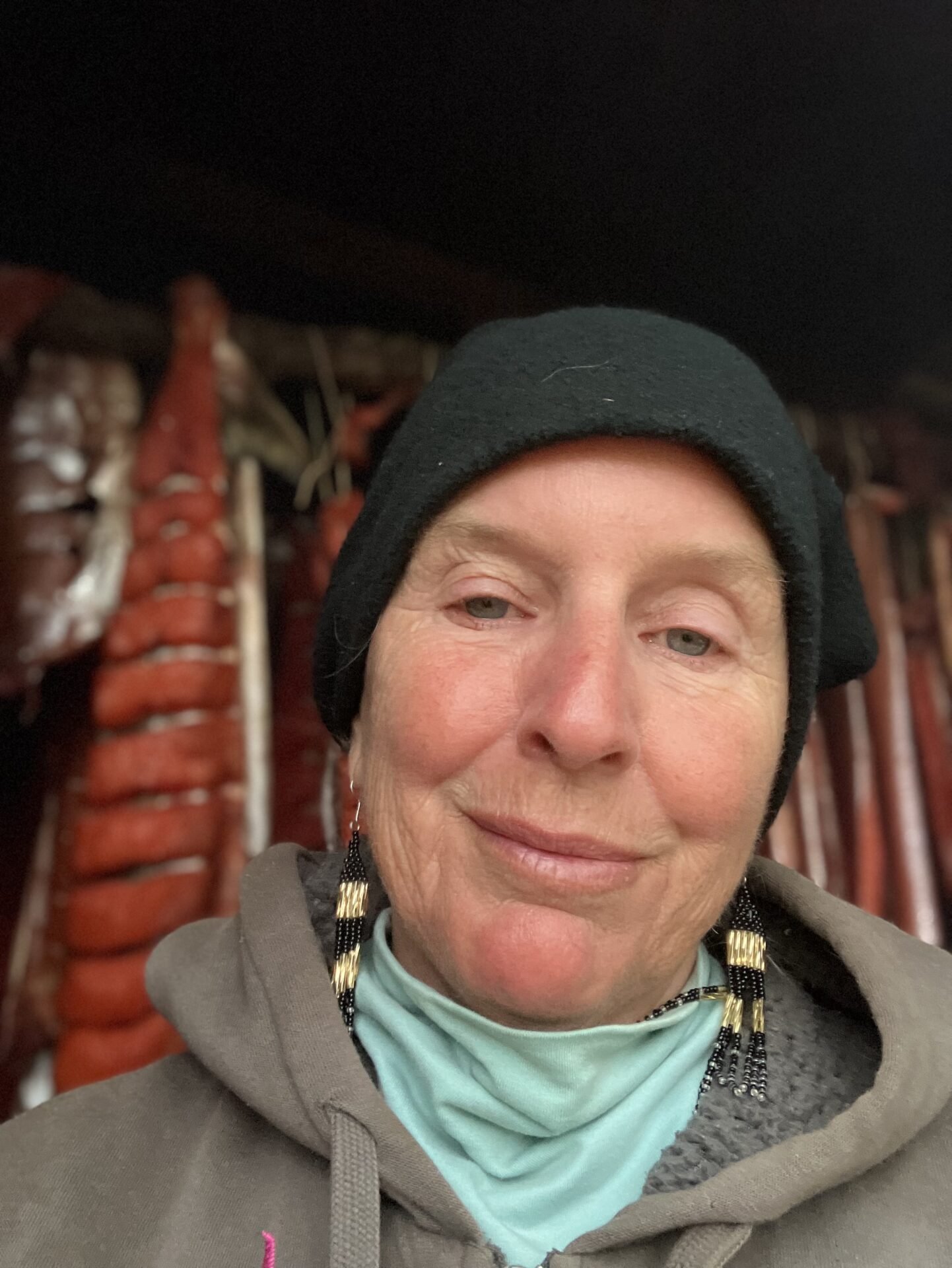
Mary George lives, writes, and teaches in the Yukon Kuskokwim delta of southwestern Alaska. An MFA recipient and holder of the Andy Hope award for fiction, she continues her practice hoping to engage with other readers and writers about the necessity of story that reflects her unique place in the world.
Return to top
