Some months back, Jean, a middle-aged woman, married herself. She shared the wedding news with many friends. She called this leg of life sologamy. Spoke only that language which swore I crave the great silence. She plied her one-mindedness, daily untwining that quest for fleshed coupledom.
After thirty half-moons, she decided to self-divorce. This, after multiple rounds of therapy. This, after how many times she’d actually separated from her body?
She rhymed out the rest of her days mating with slate-gray ponds and afternoon sand dunes. With the barn owl’s flittering click-purr. With the bald cypress’s frail shadow-tines.
Notes:
In this flash nonfiction piece Jean foregoes the usual quest for fleshed coupledom with a fellow human and weds herself to self, to stillness, to the great silence. While perhaps admirable in certain traditions, and certainly worth a try, that intimacy ends up airy. Arid. Its multiplication of a sense of separateness does not help her evolve. As a means to heal and move forward more fully, more boldly, more oddly?, she chooses to embrace—figuratively to mate with—members of the animate Earth community: in this case, ponds and dunes, owl-sound and cypress shadow.
The Once-over
If you look up at the right time today, you will see a C on the moon. Don’t look at me with that tone of voice. Stop looking and start seeing what really is not what you think it is—it’s all been saving itself up to happen. Look up emergentism, panpsychism. One look from the honey locust straightens my spine. Looks like the water’s been cloudy and now it’s clear. You look like you’ve been riding the rainbow from China. Look: self-loathing always leaves the world loveless. Look after the parts of yourself that are soft. Always look at your partner with a good eye. Looks like that tree ran into its own trunk. Don’t look for how words sling around with their wounding. Look: who’s even in sync with these dying systems? Polyopic: look it up. Maybe the universe splits every time that we look at it. Always look into someone’s left eye. Source? Tried looking it up but I didn’t see anything. Look, the earth has been cleaved from its heart and hangs on a hook. Look, are we all laptops or part of one supercomputer? Look around. Looks like this song is the invite to be in this union. Stop looking for erratic partners like your first caregivers. Look, we should just get married or else break up. The bedroom’s a mind from which we look out at the city. Look for ways to be shown new curves of the earth. Look, being the same doesn’t mean you’re compatible. Look: the base of both cruelty and care is leaked-out pain. Look for that feeling you’re falling toward yourself. Personal microbial cloud: look it up. The Greeks, holy circle: look that up. Look, the whole ploy is to keep us from feeling things. Something stopped looking in half-lit rooms—less inner reckoning. Always look for surrender like the mystic. Look how tightly light is bound in trees and stones. The pulp inside dragon fruit looks like the cosmos. Look: a simple light switch helps you look back on the now. There are some things looking up. Hey look, I’m a little heart of hearing. Look here, make it all up out of weird stalactites of music.Love, looky there, there, there. It was the last place I looked.
Notes:
In this prose-poem, Earth broke loose from its anagram heart and hangs on a hook; mind is adrift from its mother-sense, feeling. In the midst of its journey, the poem asks us to “[l]ook for ways to be shown new curves of the earth” as it seeks out new, more lasting modes of communion with self, yes, but also with all possible stripes of other, to include honey locusts and stones. The poem serves as reminder that all beings and things are but fractals of the universe (“The pulp inside dragon fruit looks like the cosmos”). This to say, we are all part of the holy circle, and we rise and fall as such. So, we sit down to write weirdly hopeful musics.
About the Author
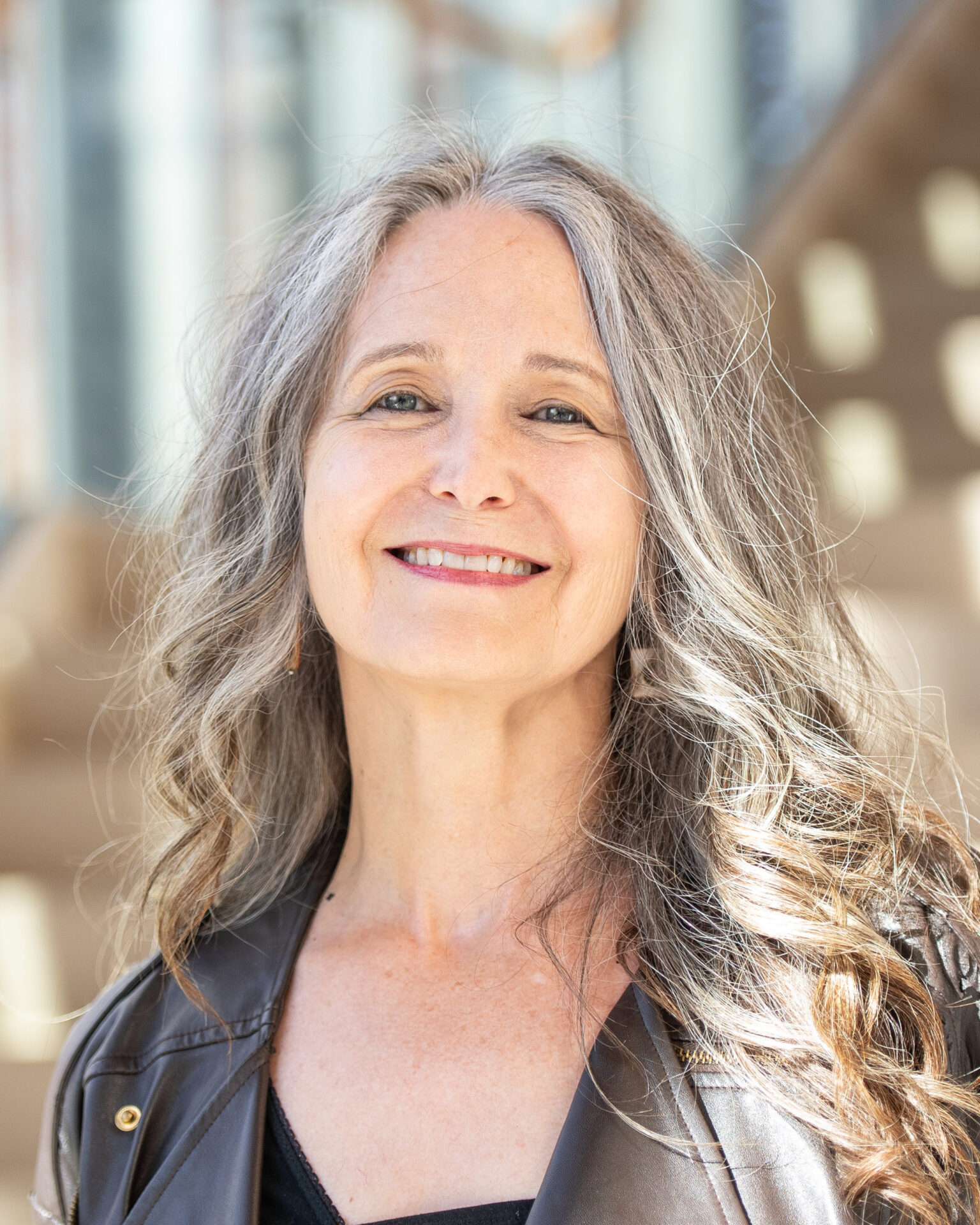
Diane Raptosh’s collection American Amnesiac (Etruscan Press) was longlisted for the 2013 National Book Award (poetry). She is the recipient of three literature fellowships (Idaho Arts Commission) as well as an Alexa Rose Foundation Grant. The winner of Idaho Governor’s Arts Award in Excellence (2018), she was Boise’s Poet Laureate (2013) and Idaho’s Writer-in-Residence (2013-2016). Her ninth collection, I Eric America, was published in 2024 (Etruscan Press). She teaches literature and creative writing as well as courses for the criminology program at the College of Idaho.
Return to top
