Ah, not to be cut off,
not through the slightest partition
shut out from the law of the stars.
…
Rainer Maria Rilke
Each morning I awaken, as do we all, to find new sinkholes of depravity and catastrophe expanding around me—another grotesque revelation from the Epstein files, more dying children calling for their mothers, more mothers dying, the concentration camps, the bombs, the blasted forests, the overheated earth, another species gone extinct. I know that reasonable men certain of their power have been committing atrocities seemingly beyond my imagination for…millennia. Do I really have to watch? Do I have to know? Can’t I just put my head under the covers and distract myself with another animal video, another funny meme, something inspirational and uplifiting instead? How do we possibly bear witness to the maggot-ridden underbelly of civilization itself? I know that I must look upon what these men have done, that until we do, we all do, they will keep on doing it.
The first class I signed up for when I arrived at college, certain I was going to be a history major, was a required introduction called something like “Expansion and Exploration.” It was the end of the seventies. Things were not yet even trying to be woke. Still, the first book assigned to us was by Bartolomé de las Casas, a priest who meticulously recorded the horrors of colonization he witnessed first hand—the tortures and executions, the rapes and violations of the indigenous peoples. The teacher’s lesson was about the importance and complexity of primary sources—and never once allowed for us to acknowledge any emotional response to these vile revelations. What transpired for me in that classroom on a lovely autumn day was a revulsion so profound that my entire world-view shifted as I tried to take in the reality of these atrocities—all committed in the name of being good christians, enlightened thinkers, educated men. Here I was at an educational institution founded by enlightened christian men preparing young men and women to go out in the world and succeed—as bankers, corporate lawyers, therapists helping those titans of industry feel better about themselves, entertainers amusing them, art historians ensuring they felt cultured even as they plundered the earth.
Wanting to bear witness to what had happened to my female ancestors, I read the Malleus Maleficarum and wrote about the European witch trials. I wrote about the seer Cassandra—about what it meant to see what men could do and have no man believe you. I read the first-hand accounts of the survivors of Hiroshima and protested against nuclear weapons. But I also felt more and more overwhelmed. Everywhere I looked, at every moment in recorded history, there was nothing but slavery and misogyny, degradation and despair. These weren’t side effects of civilization but what it really was: a system of violence that could not be reformed and perfected but only, eventually, perhaps, obliterated and forgotten. How could any one person hold so much horror in their heart?
One of the ways the priests of civilization have consolidated their power is by making us fear those on the other side. We have been taught to obey and submit to the will of god, to have no other gods but the one god, to have only one god for all our spiritual and practical needs. Instead of seeking empowerment from the dead as our ancestors did, we were led to believe that we needed to heal those on the other side, help them escape the sufferings of purgatory or advance on the path of their souls. The priests would have us occupied with the spiritual busywork of helping the dead, healing the ancestors—rather than being empowered and guided by them.
How could any one person hold so much horror in their heart? Only by knowing that we do not hold any of this on our own, that our ancestors have not only seen the worst that can be done but endured the worst that the civilized can mete out. Only knowing that the dead hold it all in their ten thousand hands. Only knowing that the dead hold us.
The dead have seen it all—the wars and genocides, the slaughters and the depravities. Yet the dead have also seen the tens of thousands of years our species lived lightly in the circular rhythms of the natural world, without violence and war and slavery and misogyny. The dead can see all of the other lives they have lived and gloried in, not just their human lives but their tree and flower and bird and bee and animal lives. They know that the tides go in and out, that continents collide and drift apart, that worlds are always ending, always beginning. The dead know that no one goes anywhere but everything and everyone is always changing—and that they are standing ready to hold the living through those changes. To see with the eyes of the dead is to see the long story, so much longer than the blip of human history.
When I started seriously reading about climate change I thought at first I could not bear all that I was not only learning but intuiting about the precipice of destruction we were on. But then I began to call on these very beings who had been obliterated by our civilized rapaciousness. I called out to the vanished giants of my mountains, the American chestnuts who had succumbed utterly to a blight because not only were their groves decimated by logging but the passenger pigeons whose migrations had nourished them with their droppings had also been hunted to extinction. I called on the passenger pigeons. I went outside and stood on dirt that held the remains of their vanished bodies and knew that they could hold this all with me. I didn’t need to heal these beings, I needed to summon them to me, to know they bore me up, literally, and they would guide my feet forward. Lead us out of this catastrophe, I begged them, show us another way.
Often when I am reading the Epstein files, my heart shatters with unspeakable fury and sorrow—and then I call out to the children, the little ones, the nameless girls and boys, vanished into the hell realms created by these monsters. I do not know your names, I tell them, but I know you are there. I know you have seen the depths to which the living can sink and I call on you, each of you, soul upon soul, to make it impossible for our species to even imagine doing such things to each other.
Because we do not know how anymore to call on them we are often overwhelmed by the dead. And because we are overwhelmed we just don’t want to think about them. And so the monsters can continue being monstrous because we are not bearing witness. We must bear witness.
I want to see, see everything, with the eyes of the dead while I’m still alive. And the dead will give me the courage to do that.
After all the men have run away, three women stand at the foot of the cross as one they love succumbs to the agonies of a terrible unjust death. His mother, his lover, and his friend. The three Marys: the crone, the mother, the maiden. Their hair trails on the ground and their hands dig in the dirt. I see them calling on all the dead—all those murdered by men assured of their righteousness—to help them bear witness. They do not deny, betray or run away. Their sorrow becomes our sorrow. We are the dead who are holding the sorrows with each other.
Do not turn away. Let us know the crimes civilized men think they can get away with. Let us rage. Let us bear witness, day after day, year after year, until such men are nothing but dirt.
About the Author
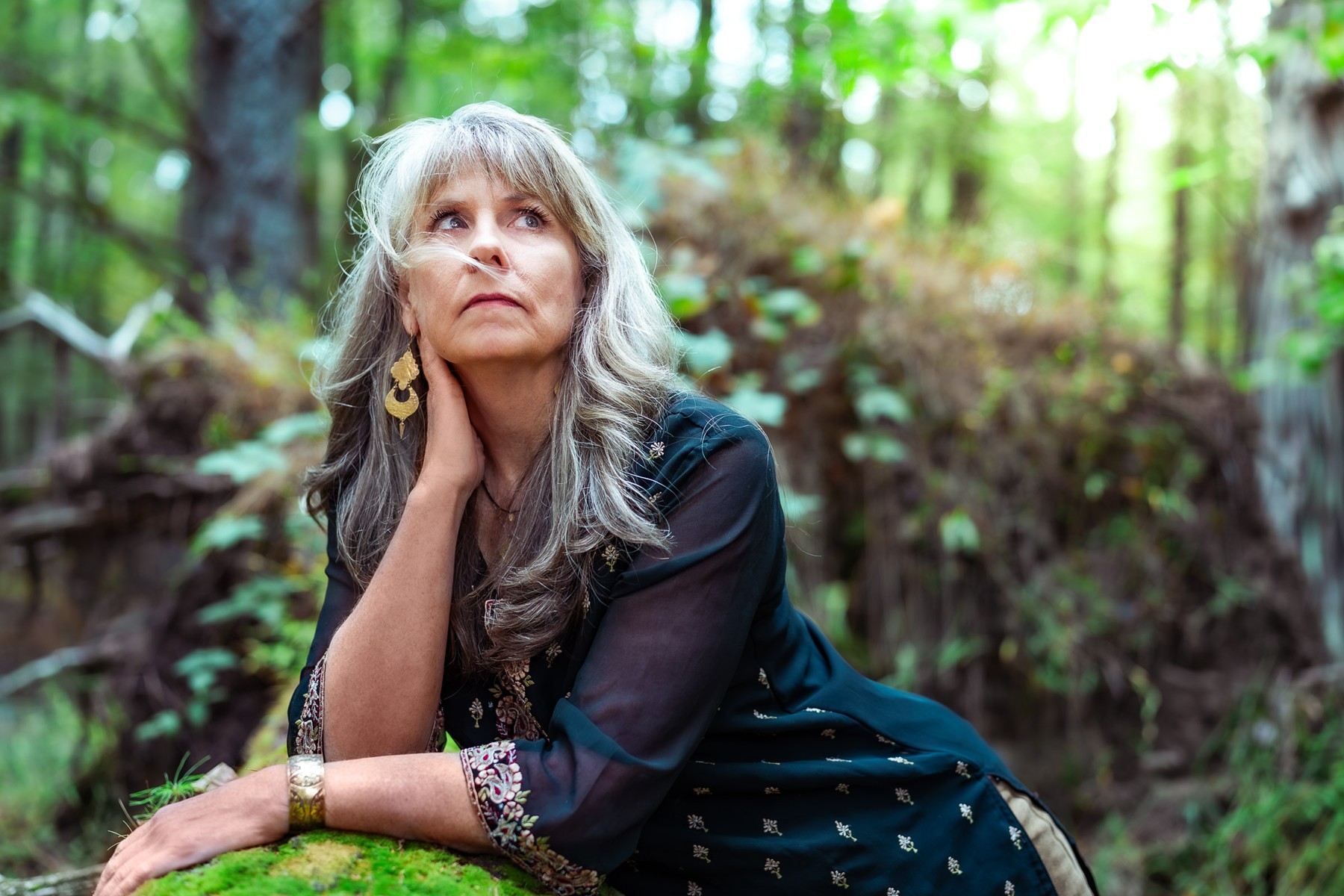
Perdita Finn is the co-founder, with her husband Clark Strand, of the feral fellowship The Way of the Rose, which inspired their book The Way of the Rose: The Radical Path of the Divine Feminine Hidden in the Rosary. Her book Take Back the Magic: Conversations with the Unseen World is an intimate journey through her recovery of lost ways of seeing and knowing. She speaks widely on how to collaborate with those on the other side, on the urgent necessity of a new romantic animism, and on the sobriety that emerges when we claim the long story of our souls. Her next book is Mothers of Magic: Summoning the Wisdom of Our Ancestors, to be released on May 5th, 2026. She lives with her family in the moss-filled shadows of the Catskill Mountains.
Return to top
