Once, We Had a Garden
I’ll never forget the sound of my children laughing as they planted beans. That summer, their homemade Bean Eater chant echoed across the yard as we knelt in the dirt, planting seeds into the sun-warmed soil. The soil was almost a part of me — under my fingernails, in the cracks of my hands and caked into my kneecaps where I knelt. Above me, the birds sang their songs, and the poplar leaves whispered in the wind, catching the sunlight just right.
We had seasonal rhythms on the farm. May long weekend was for planting, a giant burst of productivity pressing seeds and plants into garden rows. Weeding happened early, before the heat set in: eggs were collected from the coop, and lemon balm tucked between the beans gave us sun tea. On the weekends, we harvested like it was a festival — arms full of tomatoes, heads of lettuce and zucchinis the size of your forearm. In the fall, we brought out wheelbarrows full of squashes, hung up onions to dry and dehydrated herbs for days. That land buzzed with life, and so did our family.
We dreamed big. Raspberry thickets for jam, an underground greenhouse in the hill, a life measured in chicken names, barn cats and jars of pickles. It wasn’t about self-sufficiency, it was about connection. Root-deep connection with the land. And for a while, we really lived it. We built it and believed it, and celebrated when everything on our plate came from our land.
But dreams can wear out, like jeans at the knees. The unraveling came slowly — so slowly I didn’t see it at first. Everything went a bit soft around the edges. The shared rhythm faltered and silence crept in where song had been. Divorce didn’t crash in; it slipped through the back gate.
When I left, I left everything. The cats. The nettle patch. Even the moose I’d speak to at dawn. I said goodbye to the land like you’d whisper to a sleeping child before a trip. My grief wasn’t tidy, it was defeated, cried out and angry. This loss had crawled inside my bones. I wasn’t just leaving land. I was leaving a life I had shaped, nurtured and tended with both hands and gave everything I had to.
For a while, I didn’t know how to go on to anything else.
How do you explain and process the loss of your rhythm, your connection to the Earth and all of your dreams? I couldn’t. I just felt lost, unanchored, out of sync.
Back Where It All Began
So I ended up in Ontario again. Back where I’d grown up. Familiar, yes — but now I saw it all through farm eyes. After 11 acres of space, the tight clusters of suburban houses felt disorienting. Where did the wild things even live?
I ended up back in the garden of my childhood. And I mean that very literally: the same backyard plot behind my parents’ house. It was empty for the season, save for a very determined patch of spearmint. We were past May long weekend. And my hands twitched like they remembered something my mind didn’t yet trust.
I asked a few questions. My mom handed me her garden notebook, fat with decades of entries: seed names, frost dates, wild scribbles from the late ’80s. 1986 was the first one. I flipped through slowly, like it might reveal a map. A way back. Or at least sideways.
I turned to a page from 2011, the year I gave birth to my son, and found a note in my sister’s handwriting: she and my dad had planted the garden that year, while my mom came West to support me. I’d never seen that page before. But there it was — a quiet record of love.
The journal felt like a thread. A tether. Not to the past, but to continuity. To care. I might’ve felt lost, but the garden, and my family, hadn’t forgotten me.
This wasn’t my land. I did not own it, I didn’t live on it. But somehow I didn’t need to. My fingers didn’t ache to possess anything anymore — just to be present. I sat in the garden and asked the soil, What do you need? I listened. It felt very hard.
There was a rhythm here too, quieter. Familiar-but-not. The way you remember the lyrics to a song but not the melody.
I asked my family for their input on this long-standing garden: What did they need planted? What were their favourites? Their answers were enlightening, so I gathered the seeds and began to plant.
I planted seeds I wasn’t sure would work here. Alberta favourites, now in Ontario’s sandy, longer-season soil. I planted lavender, which would never have survived in Alberta’s -30 Celsius winters, for my own pleasure. It was a risk, sure, but a hopeful one. I mean, isn’t every planting, every seed, a small act of faith?
I wasn’t married anymore. I wasn’t a homesteader either. My 11 acres were gone. I felt like I had failed at what a good life was supposed to look like. I certainly wasn’t anyone’s success story. I was just a woman with dirt under her nails and an empty garden journal of my own, who wasn’t sure where she fit anymore.
Grief has a way of hiding in the hands. Mine twitched for chores that no longer existed – feeding chickens, and morning garden walks with my fingers wrapped around a mug of tea. My shoulders ached to hold my favourite kitten with his tail wrapped around my neck, and his purr echoing in my ear. And I missed my border collie, who followed me everywhere while I worked with his quiet companionship.
A few times a week I walked my niece to school, stood with her on a bridge watching water tumble over rocks. After drop-off, the woods became my ritual. I didn’t always know where I was walking — just that I needed to. I walked through trout lilies and trilliums, found garlic mustard and burdock, and watched how the light filtered differently in these Eastern woods. There was nothing to tend but me.
And the forest tended me and held me tenderly.
Rebuilding: A Medicine Wheel Garden
Now I live in a small town. The kind with one grocery store and a Main Street that shuts down before supper. People wave. And if you’re new here, they’ll call out and ask you who you’re related to.
I miss the coyotes. The dark skies. That mama moose and her gangly calves in spring eating buds off the trees. I miss the way the northern lights danced in the sky. But life keeps surprising me.
A skunk adopted the alley behind my house. Chickadees chat from the apple tree. One day, I found a deer leg in the yard — just the leg, clean as a whistle. No blood, no body. As if to say: yes, wild still lives here. Even in town. Even with your fences.
My backyard’s not much: a fence, a workshop, and a patch of soil about the size of a parking spot. And yet here, I finally built my medicine wheel garden.
This wasn’t a whim. It was a promise I’d carried for years. I had plans in notebooks, curving border lines drawn, paths mapped out and scratched out again and again. I’d read and researched the medicinal, native plants of Alberta for over eight years. I’d wandered and learned from the plants directly. The planning of this medicine wheel garden had birthed me, as the herbalist, as an observer of land. Yet it never fit on the farm; the land never said yes to hosting the wheel. So I kept my plans, bright and bold, tucked away in the back of my garden notebook.
So you can imagine my surprise when in my small backyard, my mom took it upon herself to measure. She measured with her feet, laughed, and said, “It’s the perfect size for your wheel.” She was right. It was exactly the size I had designed many years before.
My parents and I dug the medicine wheel together, and then they left, and I sat in that circle and cried. For months. I planted barely anything. A bit of calendula. Pulled a weed now and then. It was a circle of grief, not productivity.
I didn’t know yet what this space would become. I just knew I needed it.
Sometimes, the seed is grief. And the garden certainly doesn’t mind.
From Seeds to Something More
What I’ve come to understand is that belonging to land isn’t always something you inherit. It isn’t guaranteed by property deeds or family trees. Sometimes, you choose the land. And sometimes, the land can choose you.
I don’t own acres anymore. I no longer have a barn or a greenhouse. There’s not even space for a proper clothesline. But I still grow things. I still tend — to my children, now a tween and a teenager, and to the plants.
The medicine wheel is slowly filling in with what thrives here: wild mint, prairie chives, fireweed, northern bedstraw, yarrow and more. The soil isn’t rich, but it’s forgiving. I mulch with what I can gather. I amend slowly. I listen closely. Each plant added to the wheel has a story, a reason, and medicine to share.
There’s something holy about tending a garden that you know you might not keep. It changes how you care for it. There’s no mastery, no conquering, only relationships. I water when I remember. Sing when I feel like it. Let the dandelion fill in the empty spaces and thank it for its generosity.
The medicine wheel has become a living altar, a place I return to again and again, not just to plant but to breathe; to cry; to ask. To sit in stillness with something that feels holy. I kneel without needing to pray, yet the prayers come anyway.
Out of this garden, new growth has come — not just in plants, but in people. I started a community herb club to share the plants I walk with and the stories they’ve given me. This spring, twenty people signed up. I was stunned. Turns out people are hungry for connection, for wildness, and for the language of plants. The meadowsweet bloomed pink unexpectedly, not the white I’d planned on. And beautiful all the same. Another lesson in surprise, in letting things be what they are.
Then, a friend invited me on a wild mushroom walk through private land. We joined two others and wandered for hours, identifying plants, trading stories, laughing into the wind. It was the first time since the divorce that someone offered me land without strings attached. Just trust. Just shared wonder.
These small invitations added up. And slowly, I started to feel like I belonged.
A Gate Reopened
The medicine wheel is now a tangle of native plants, volunteers, and intentions. I’ve added a bench where you can sit and reflect, breathe, and do nothing. Out of an old red door I’d carried through the move, I built an arbour. I didn’t think I was up to the woodworking challenge, yet I was, and my kids helped. We built it together. It’s not perfect, but it holds.
We’ve found a new rhythm: after dinner walks to check on the community garden, our new puppy trotting ahead. We pause at neighbourhood gardens, admire what’s growing, and take mental notes.
This spring, I planted the beans again.
My knees sank into the soft earth. My hands moved before I could think. No chant this time. Just breath and memory. And maybe — just maybe — a faint echo of laughter in the wind. The kind that comes from children on a sunlit farm.
And, for now, that is enough.
About the Author
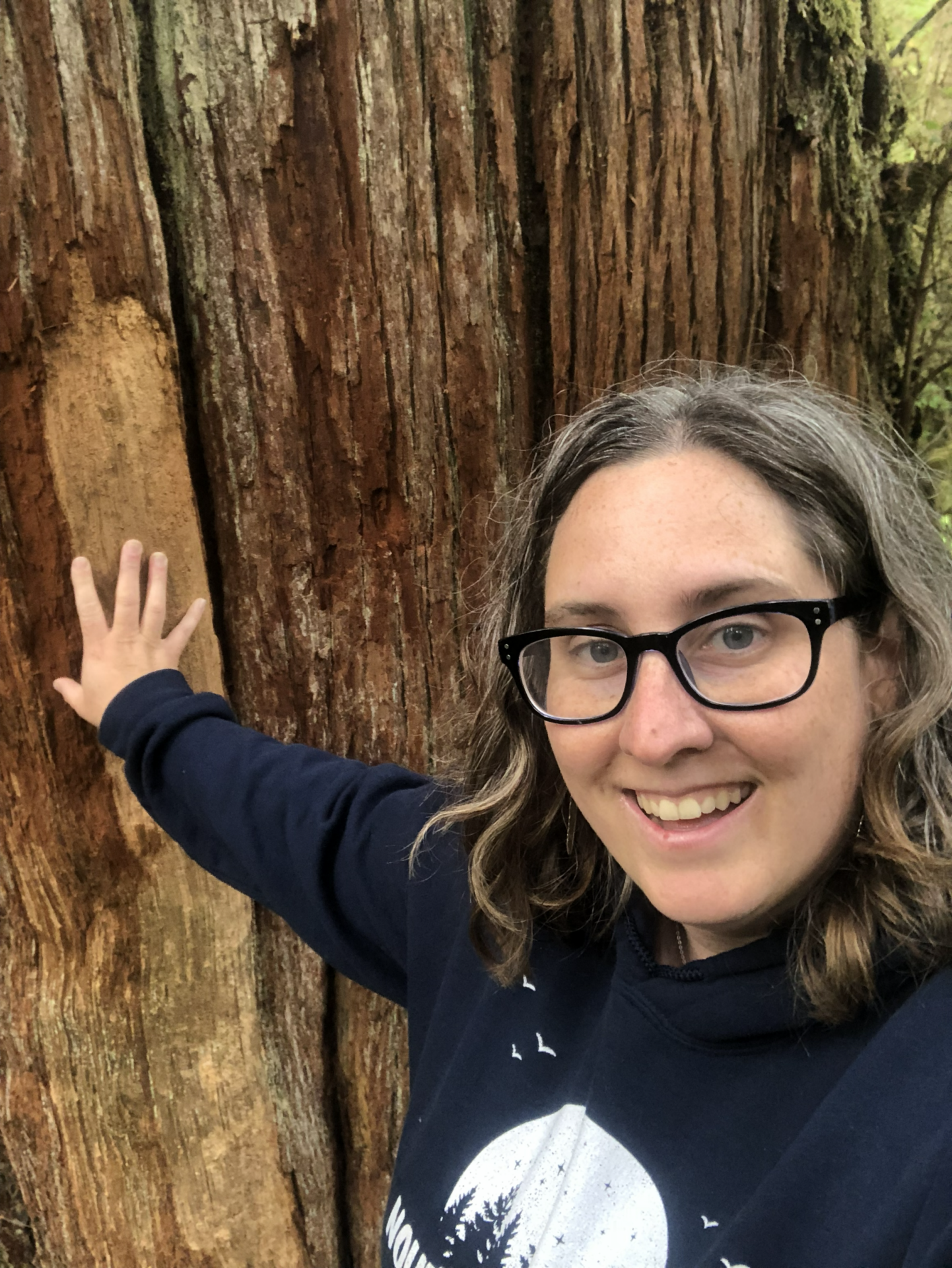
Holly Phillips is a writer, artist, and community herbalist whose work lives at the intersection of land, story, and seasonal rhythm. Through her project, Trail of Adventure, she creates small-batch herbal products, flower essences, and printed works – including her annual lunar Wildcrafted Year planner.
She is currently digging her latest garden – a teaching meadow – and contributing to the development of Harmonic Hills land trust, where the focus is on regenerative land stewardship, and exploring place based learning.
Return to top
