“Roar, lion of the heart, and tear me open.”
Rumi
During a storytelling project I was conducting in Becau, Romania with Roma women, one of them asked me if it was helpful to tell stories in winter when it was freezing indoors without heat or fire. Her husband, desperate to keep the family warm, had removed wood from their ceiling to build a fire that went out by morning.
I had no answer. I asked if I could visit her house. She lived outside the small city of Buhusi, in a make shift neighborhood of concrete houses with wood ceilings, created for the Roma. Inside, I stood bundled in a winter coat with a blanket over my shoulders. It was freezing. I said I was sorry they lived without heat. She said her life was hard, but not as miserable as the life of the lions.
How could there be lions in Northern Romania?
“I hear them howling hungry in the early mornings.” She led me up a muddy path to a dilapidated zoo outside the city of Buhusi. I was shocked by the unusual silence and the presence of over 145 animals. In three rusted cages there were seven lions. Two zoo keepers carried barrels of water to the filthy cages, where the lions paced slowly back and forth.
I returned to New York a few days later, haunted by the zoo, deeply moved by the Roma women. The zoo had a meager budget that barely fed the animals and there was no source of water on the land. I raised funds to have a veterinarian from Four Paws visit the zoo. And, convinced a large and wealthy monastery next to the zoo, to dig a tunnel to let a long hose bring fresh water to the animals. The Roma women and I created a Sunday Brunch with the animals, bringing people from the city to the zoo. We sold bags of food to families and were able to plant a garden to feed baboons, and goats.
That summer, and every summer for the next three years, I conducted a storytelling project with Roma children in the zoo. We would help the animals as best we could, raise awareness about their condition and provide a different story about “gypsies” in the community.
The children and I met in Scuolo Uno, (School Number One), an abandoned cement building with empty rooms and scratched blackboards. A trash-covered path, once part of a flourishing meadow beside Scoulo Uno, wound its way to the zoo. The zoo was built by a dictator who received wild animals as gifts, symbols of power, from foreign governments. Lions, bears, rare birds, a crocodile now deceased, dingoes, horses, goats, even street dogs and cats caught and caged, survived in narrow filthy cages that had been created to look like a Victorian Park. The children were an eager task force of helpers. They dug gardens, planted flowers in front of the dingo cages, heaped hay into tiny stables which housed bone-thin horses, cleaned cages where possible, and learned about their own capacity for improving the world.
Our mornings at Scuolo Uno prepared us for our afternoon of activities, which usually included a picnic we shared with impoverished zoo workers. As the kids arrived we created a circle of games and mindfulness activities outdoors, in tandem with a translator. Then, seated in an empty classroom, I retold a different Roma fairy tale every morning. Each child became a character, an object, or an animal. Everyone had a role. We acted out the story in a wildly funny, chaotic and heartfelt narrative drama.
On the blackboards we listed any animals, landscapes, or plants in the story. There were always talking animals, creatures lurking in forests and lakes, invisible spirits, medicinal fruits, and shapeshifters, good and evil. Before we hiked up to the zoo, even in heavy rain wearing huge trash bags as raincoats, we concluded our storytelling drama with a ragged Virginia reel calling out names of animals, and becoming animals. We all promenaded down the center growling and crawling, flying or hopping, with laughter. We called on a kind of animal intuition that delighted us.
Day by day, as we came to know the animals more intimately, the children transformed our play from a zany game into a magic theatre. Occasionally, the reel grew silent as someone seemed to fully embody a bear, become a cat, a dove, or take on the mantle of a lion. The casualness of play reminded me of films of the XSan people of Botswana, the ones we call Bushmen, who not only tell stories of lions and humans protecting one another, but of becoming lions, of hunters speaking with lions to gain permission to hunt. We participated in a lost knowledge of becoming other.
My story offerings immersed us in our imaginations, opened our inner eyes to see the animals we visited with kindness and empathy, and to play with an abandonment of becoming that felt holy. In those moments we repaired the broken threads of connection to nature and to our natures, and remembered.
Carrying baskets with sandwiches, plastic bags (if we were not wearing them) and shovels, we made our way up the path to the Zoo. Five children volunteered daily to clean the road. At first we were ignored. But the people of Buhusi, who generally disregarded, even hated, the Roma, would wave to us. Occasionally someone would bring us a loaf of fresh-made bread. A few people gave the children bags of carrots and apples for the animals. The energy of the children, in love with their mission, and the cleaning of the park that had fallen into disrepair, won the hearts of many people.
Before entering the damaged arched-wood entrance to the Zoological Garden, we paused. I repeated my instructions: we were to slow down, pause, and then enter without making a sound so as not to disturb the already distressed animals.
Later in the summer, with the help of a botanist from Bucharest, we ceremonially released two rare owls into a forest, and let ten caged doves fly into the trees surrounding the zoo. We photographed the cats and dogs and were able to find homes for almost all of them. It took seven years to place the other animals, the ones who survived, in sanctuaries, or better-tended zoos. Four lions went to South Africa. Two disabled lions whose spines were weak from having been fed fast food and used for tourist photographs until they were no longer “cute,” were given a special grassy enclosure in a Dutch zoo. But the day that changed us all happened in early August of the second summer.
My favorite child was a boy named Laurencio. He was capable of setting dingoes barking, which upset baboons and caused the unhappy lions to pace back and forth, roaring miserably in their small outdoor cages. If I turned around Laurencio pushed children half his size; then pretended to be innocent. He was intelligent and aware of everything that happened around him. In time I trusted him with my purse and cameras. One day, he found a bucket, filled it with water, and washed small children who arrived from begging in the streets, or playing in mud, so they could enter the school and not be mocked by others. He became my assistant. Like all of us, Laurencio fell in love with the sad-eyed beings in inadequate habitats, and grew into a genuine caretaker.
For weeks he was the first one to slow down and pause at the entrance. But one afternoon, for a reason beyond comprehension or no reason at all, Laurencio did not pause. He took off, running, my purse flying behind him. “DESTUL. STOP!” I yelled in my bare-boned Romanian. “Lineste! Silence.”
He stopped almost in mid-air, trembling with energy.
My ragtag explorers of the world of animals, dedicated to growing a garden and providing clean water for bears and horses, watched. Then, they tip-toed behind me through the wood arch. We stood beside Laurencio. Another moment and he would have set the animals into a frenzy. I put my hand on his shoulder and whispered, “Multso mex. Thank you.”
Laurencio breathed deeply. Knowing that he, like the animals, was hated and ill-treated, I could never be truly angry with him. He adjusted my purse on his shoulder and nodded. We walked side by side without making a sound, past the goats’ enclosure, the empty cage where the crocodile had lived, moving even slower as we passed the two baboons, until we reached the first lion cage.
A procession of children followed behind us in a single line.
Bett was a large male. He was twenty-five years old and had never known the feel of grass beneath his feet. All the lions in the zoo were his children. As we passed by, Bett moved toward the rusted inner bars of the cage. I looked up. My eyes met the eyes of the lion. He stared back; his gaze held me to the ground. I sank into an ocean of amber. The beingness of the lion filled me. Then Bett pressed his shoulder against the inner bars. The bars were separated from a second wall of rusted metal by a thin moat of dirt. A small clump of grass was in the dry soil.
I often woke up at night during those months, frightened by the thought of the zoo being abandoned, or a fire burning, the animals unable to escape. The sound of howling and screaming might remind those in the city of Buhusi of the war that had destroyed three-fourths of their homes barely a generation before. Would they remember the animals and open the cages?
Bett’s eyes did not move from my eyes. He had my full attention. Bett extended an enormous paw through the first bars. He scraped the few blades of wilted grass with his paw. He was beckoning me, showing me. I was swallowed in his language, in his love. “Laurenzio, the sticks,” I said, “bastoane lungi.”
We had made hoes the day before with broken broomsticks and parts of old tools, tied together by pieces of ropes. Laurencio put down my purse, went to a shed nearby, and took out the long sticks. The children gathered hanging green vines that dangled from trees beyond the cages. They moved in slow motion. Others pulled supple lumps of hay with their hands and pressed them between the metal fingers of our make-shift hoes. Laurencio handed me one hay filled pole. I leaned close to the outer bars, and extended the stick toward the top of the cage.
Bett stood up on his hind legs. He was larger than expected. His body stretched from the concrete floor to the top of the bars. He opened his big paw and pulled hay and green vines into the cage. Our eyes never strayed from one another. We remained in a waking dream. I was lion. He became woman. Caringly he washed his face with grass. He sniffed the hay. It was palpable pleasure. The female lions stood up, stretched their lithe bodies to the top of the bars, and the children held out more hay: hoes abundant with vines cascading like tangled hair.
The lions sniffed. They pulled vines into the cage. They covered their faces with green grass and began to make a chuffing sound. No sound was made by the children. With utter grace, initiates in a sacred ritual, they carried grass and hay to the cage, refilling the sticks, making offerings.
Bett looked at me and with a gentle nod, moved his eyes away from my eyes. He and his family spread the hay and vines over the concrete floor. The lions lay down, rolled over like kittens, and purred loudly, adorning themselves in hay and grass for the first time. The cubs pounced on the hay, and rolled into their mother’s arms. Laurencio put his hand in mine. I wept.
I thought how little it takes to find joy.
The next morning and mornings afterward, the children, in our empty schoolroom, insisted on replaying what had happened. That was our story: becoming lions, anointing ourselves with grass, rolling over and over, purring, children carrying pretend hoes of grass. It was a ceremony of kindness, an act of primordial transformation.
I could not stop returning to Buhusi. I promised Bett that I would send him and his family to a sanctuary. They would know grass and stones, places to run and hide. It took seven years, with help from animal activists, the European Zoo Association, donors, the vet from Four Paws who had saved lions and elephants in Afghanistan, and the Vice Mayor who now homed four of the street dogs, to find homes for the animals.
One morning the director of the zoo telephoned me in New York. Bett had died. He died before the other lions left for South Africa. He was twenty-six years old. The director told me that the skin of Bett was hanging under the arched entrance and families in Buhusi had placed flowers below it.
Betts’ children were rehomed in South Africa. His cubs survived the longest. They were renamed Jools and Jim. The cubs were inseparable. But Jools became ill and died. The director of the sanctuary told me that all the lions outside the sanctuary roared the entire night that Bett’s child died. Jim, however, found a mate and is the last of the lions still living. He is now an old man with a pride of his own. Many years have passed. The eyes of Bett look out from my eyes. If I am very quiet, I can hear the deep-throated purr of lion in my body. Bett gave me courage to know my animal self. And he showed me how to bring his children home.
About the Author
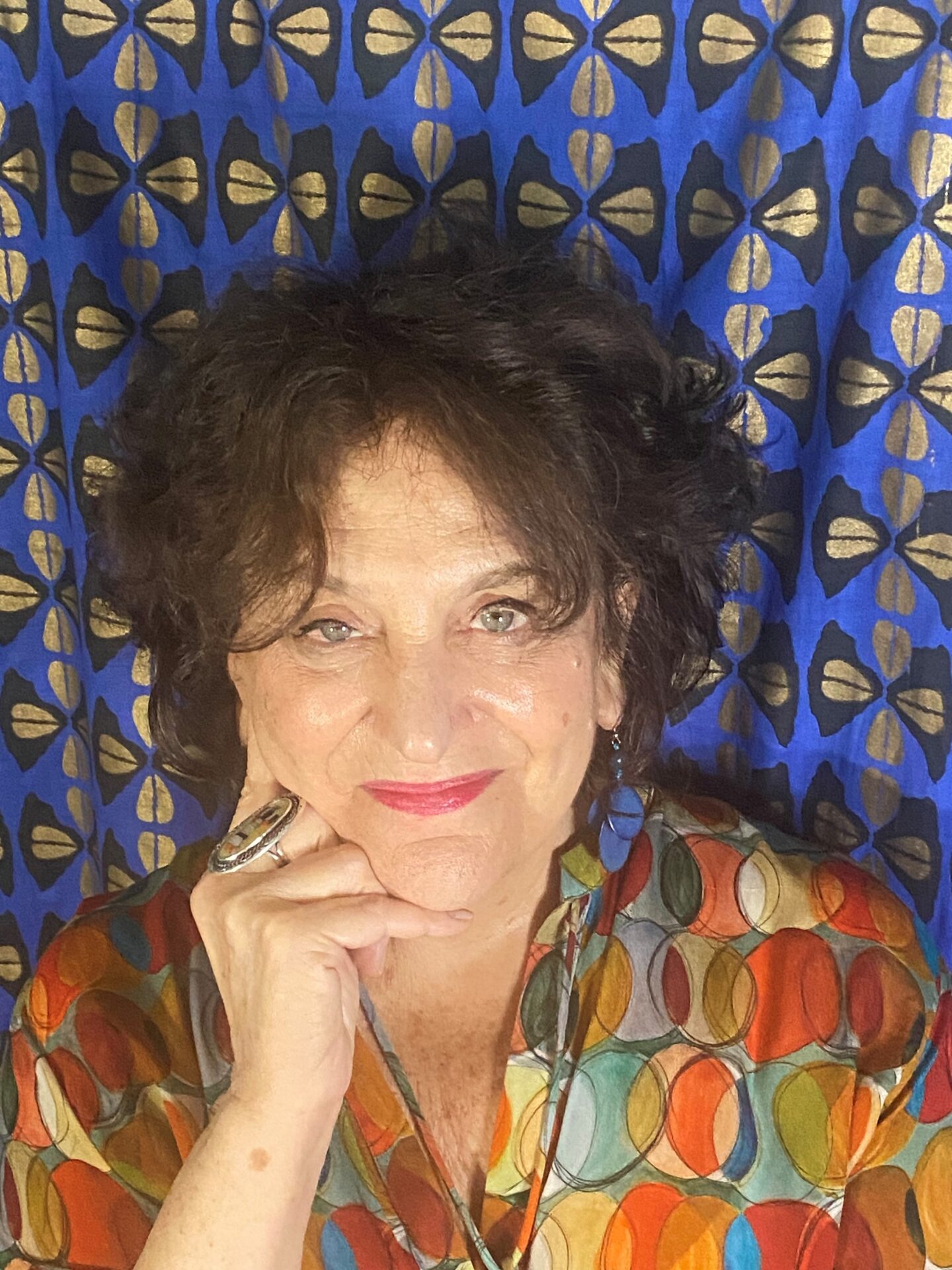
Laura Simms is an internationally acclaimed writer and storyteller. She performs and teaches worldwide. Her most recent book Our Secret Territory: The Essence of Storyteller has been called the best book about storytelling. www.laurasimms.com. She has won numerous awards including The Talking Leaves Award, A Runner-up Grammy for Spoken Word, and the Sesame Street SUNNY DAYS award for her work with children worldwide.
Return to top
