How small the soul is, how often muted.
No one notices the wick, though it connects the flame to the flammable.
What the body knows: its dryness, its need for nourishment.
What it feels like to be fluid, to be dispensable.
A bird’s presence in the world goes unnoticed by those who don’t believe in birds.
Suddenly, you are lit. Suddenly, you are taken.
You say your people were never those to believe in religious faith of any kind.
You give voice to whatever made you.
Regarding death, if you could take it gently in your hands and then extinguish it.
You do want to help the vulnerable though they are often shy.
In other words, why have you come?
You might not know how to speak of your affection for light and its accoutrements.
Seek out the most stable, the most breathless house.
For instance, what will be left of you, what impressions, what apotropaic marks?
Wavering, blown to one side or the other, but not out.
If you are breathing, you must also be burning, this is no time to hide your views.
Do not let outrage have dominion over you.
Though anyone can tint the air around them, an aura comes from those that shine.
Like the votives, you could take everyone at their word.
~~~~~
WHAT THE SNOWFALL KNOWS
The sieve through which it falls, ecumenical in the face of wind.
Why the aides sweeping bread crumbs from the breakfast floor have quit gossiping.
As if the words to what the snow knows fell into them.
All but the menopausal woman who loudly stacks the washed plates.
The snowfall follows its own pulse, swift or slow, the rhymes piling up behind it.
How peaceful, to spend an hour holding an aged hand.
Remember, you can talk to me about anything should be said in a convincing tone.
You can begin to see life biographically, even the future, which is inevitable.
To pray is not to plea but to say words aloud that connect you to what you want to last.
In a hypnogogic state, the border on either side of dream dissolves.
How morphine must feel, the opposite of glitter.
You only notice snow is falling because of the streetlight, a jostling rather than a thing.
Only an artist would notice the shadows or lack of shadows.
How still the common room, uncommonly, only a woman at the counter, pouring juice.
It is the open spaces within the crystals that absorb all sounds.
~~~~~
WHAT THE WINTER KNOWS
What is withering. What is flourishing.
To initiate: light the candle, open the book. An initiate: a novice, an apprentice.
When your Colorists begin.
Though the dark husks of last summer’s weeds, stem-heavy, are banked against you.
Snow oracle. Dust oracle. Seed oracle.
Flourishing, occultists say, is what you feel when you see the sun rise; withering, the moon.
Moon blurred behind the clouds, a white carnation.
Can you listen to people the way you observe trees, letting them lift you into their boughs?
Preparation. Initiation. Intimacy.
The atmosphere is one of material success, earth’s seeds pocketed into every dormancy.
The bare limbs of willow are neither withering or flourishing.
There must be better words for getting old. The pines and firs, spectators in green, are exhaling on the slopes as you drive past.
Notes
These poems are written in aphoristic style, each line a complete stanza, meant to stand on its own. Traditionally, aphorisms are the standard rhetoric of wisdom. They are sayings, almost always written by men, meant to guide us in living a good life and help us in our struggles. Heraklitos’s “You can never step in the same river twice” and “Character is fate” are examples of aphorisms. Long sets of aphorisms, like Heraklitos’s, aren’t meant to tell a story or necessarily connect to each other. As Northrop Frye writes, “the use of discontinuous aphorisms suggests to the reader that here is something [she] must stop and meditate on, aphorism by aphorism, that [she] must enter the writer’s mind instead of following [her] discourse.” The wisdom I seek to access, and learn from, is from the other-than-human worlds. I think of each line as a fragment, a piece of knowledge I have gained by deep looking and listening, a phrase broken off in the effort of translation from one species to another, an effort that brings me into a more intimate relation with the earth.
About the Author
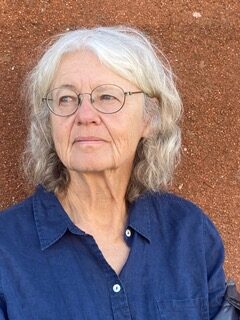
Melissa Kwasny is the author of seven books of poetry, including The Cloud Path (Milkweed Editions, 2024), Pictograph, and Where Outside the Body is the Soul Today, as well as a collection of essays Earth Recitals: Essays on Image and Vision. She is also the editor of two anthologies: I Go to the Ruined Place: Contemporary Poets in Defense of Global Human Rights and Toward the Open Field: Poets on the Art of Poetry 1800-1950. Her first full length nonfiction book, Putting on the Dog: The Animal Origins of What We Wear, explores the cultural, labor, and environmental histories of clothing materials provided by animals. She was Montana Poet Laureate from 2019-2021, a position she shared with M.L. Smoker.
Return to top
