Whales know how. Like this:
you swim alone in cold enormity,
crying who is it, where, come
closer, changing the melody,
filling the one salt womb
across four thousand miles.
Elephants also. Go on: rumble
your desire. Seismic waves
roll under vast savannas.
Far-off feet vibrate in solidarity.
Land becomes your instrument,
the lithosphere your drum.
Try giraffes, who hardly even
have a voice by day: separate,
you hum to one another through
the night, string an invisible
powerline, a subliminal violin,
making dreamers shiver.
Or cranes: up 20,000 feet,
crossing the hemisphere,
the trachea coiled and crammed
inside your keeled breastbone
bangs on your heart as you shake
skies with the unison call.
Or oak, any of the standing people:
you keep sewing secret threads
among species, lovers touching
under the table; while at the party,
on the wind, you mingle, warn,
insist: now, bloom now.
And the fungi, for heaven’s sake,
deathcap, angel’s trumpet, are you
listening? Even the least orchid,
whose seed is one grain of dust, one
drop of oil. You cast yourself into
a throng, into the stratosphere.
Not to mention stars who stream
gases and gravity across the void,
trying to coalesce: you are flung
apart, together, circling galactic
center. Your crazy orbit wobbles,
but go on. This is how we sing.
[Published in The Fourth River, 2022.]
Notes:
This poem brims with species with whom I have an intimate connection. Once, whale-watching in the Azores, I went into atrial fibrillation, and I silently called to the unseen whales for help. The black rubber dinghy in which my group floated was suddenly surrounded by whales, as if it was a baby whale uplifted by its community until it could breathe and swim. (The naturalist guide was stunned; it was not the season for babies and he had never seen this response to a boat in 20 years of whale research.) Once, as the sole visitor to the Nashville Zoo in a blizzard, a keeper invited me to put my hand into an elephant’s mouth and stroke the tongue. The elephant purred. Once, when I was preparing to attend a Council of All Beings, I felt a Russula mushroom choose me to speak to the other humans with its voice. And so on….
If only humans practiced this kind of intimacy—communion within and beyond their species. In spite of the havoc we wreak, I stubbornly believe we can rejoin creation. It is possible. I’ve made a start.
In case it surprises you, I read lately that in the Bronx Zoo, captive giraffes hum at night. I would love to stand at the fence and hum along.
~~~~~
I FLUNK THE TEAR TEST
A squirt of purple liquid in my eyes.
On command I stare into a haze. Up.
Fogbank ceiling. Down. Iffy floor.
A muddle too familiar. No matter how
I strain to look, nothing resolves into
your shape, the only one I want to see.
Seven seconds till there is no stain.
The tech shakes her head: not enough
tears. That’s impossible. I overflow,
there is no bottom to it, even though
the Colorado and the Mississippi shrink,
and aquifers, the fountains of the deep.
Yet while I cry and cry for you alone,
right whales disappear, Masai giraffes,
loggerhead shrikes, a host of loves
without a name become invisible.
So many reaches of the heart go still.
It’s true, then. There aren’t enough tears.
[Published by Sidhe Press, Grief anthology, 2025]
Notes:
I never know where a new poem will take me. This poem began at a visit to my optometrist, who diagnosed dry eye. Pretty soon I found I was really writing an intimate poem about grief for my husband, who died five years ago. Then, the bottom gave way, and the poem opened into a much larger space.
Grief for earth is so great, it is hard to fathom. And I am, we are, so small in capacity; the selfishness of local grief blinds us to a universal one. I hope for some readers this poem is an eye-opener. We can’t grieve for what we don’t let ourselves see. Or save it. I hope that the capacity to feel something—anything—means we can still cultivate the power to care more largely.
~~~~~
ARK
It swelled in the telling, like the belly
of a cow with calf. It became exact
as a suit tailored to the torso of a judge.
Hewn, supposedly, from gopher wood,
name for who knows what. Actually,
he used what he had. Boards scavenged
from sheep pen or pried from a fence.
Somehow his walls slouched but did
not quite fall down. Meantime no matter
how the story goes, his wife and sons
were not on board with his fixation.
Neighbors spat and jeered. Who wants
to cheer for doom? And so he worked
all by himself against extinction, took
anything with fur and feathers in,
losing a lot of them in working out
who went next to whom, how tight
to cram them in. Also how few
of each he could get away with.
It wasn’t two. here were so many
mysteries he never did get right,
including what ate what ate what,
and how much almost everything
hung on everything else. Etcetera.
He broke every rule except the one.
Which is to care, no matter how far
over your head you are about to be.
Never mind if you can’t even swim.
[Published in Pangyrus, 2023.]
Notes:
The story of the Flood has been glorified—Noah follows exact specs dictated by God and crafts a fine shipshape piece of carpentry. We belted out a cheery song about that at summer camp. Hooray, we sang, the worthy ones got saved.
But the same old story is happening now, and it hurts: human greed is making a ruin of the biosphere. Except there are no instructions, species are winking out, and I often despair.
I feel intimately linked to lonely, eccentric Noah; I want to tell him I’m his daughter. The thing I cling to out of his horrible story—the Ark that floats me—is how one person, imperfect and inadequate, unsupported and probably crazy, went ahead and gave his all. Messily. It was sort of enough.
That’s the intimate message for me. If I do everything I can (and if you do everything you can), some part of this beautiful complex world will survive.
About the Author
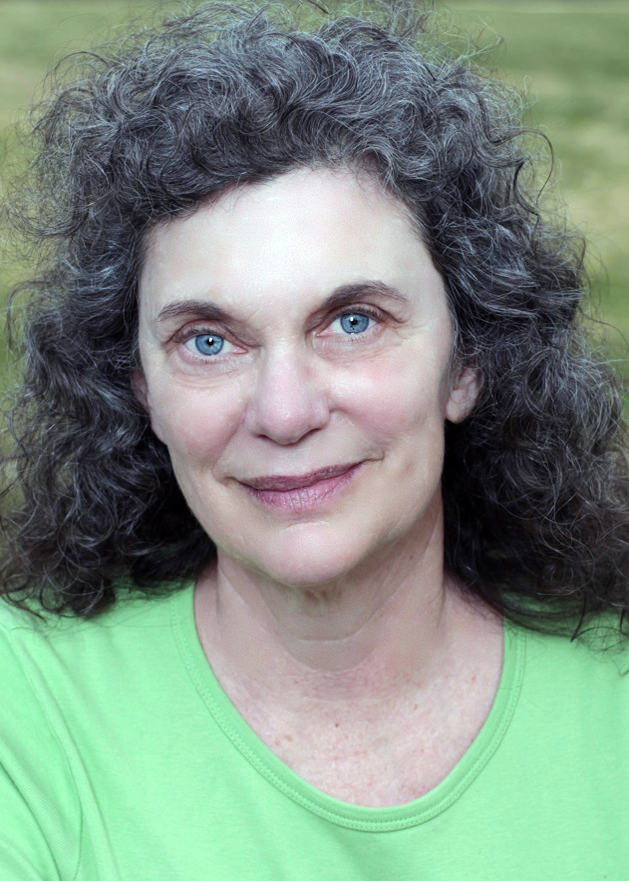
Kristin Camitta Zimet is the author of Take in My Arms the Dark, a book of poetry, and the co-author of A Tender Time, a book about end of life. During COVID, she wrote and posted an article every day for two years, introducing 104 native plants. She works on behalf of the natural world as a Virginia Master Naturalist, as a docent for the Nature Conservancy at Ice Mountain Preserve, as a nature interpreter at Sky Meadows State Park, as a citizen scientist counting nightjars, winter birds, frogs, and butterflies, as an active member of the Virginia Native Plant Society, and more.
Return to top
