It is imagination that allows us to “penetrate the veil”, to see the underlying structures of the cosmos. The work of the mythic imagination is about “descending into the deepest layers of our individual psyche, in order to understand the ways in which we are uniquely entangled with the world soul.
Sharon Blackie, The Enchanted Life: Unlocking the Magic of the Everyday
In 1983, I was invited to give a storytelling workshop for elders on a marae, the sacred land of a Maori tribe, in Northern New Zealand. It began with a traditional ceremony that transforms strangers into guests. I passed through a wood fence, a threshold between everyday perception and sacred mythic space. Before us stood a carved ancestral house, considered the body of the ancestors. An old woman standing beside the house beckoned us with a penetrating incantation, called karanga.
Everything shifted. As we moved toward the house of ancestors, walking slowly, three questions were asked of us. First: had I, in historical time, known Māori people? I had not. Then, in mythic times, had we met? Because they knew I was born Jewish, I was connected to the Maori in mythic time. Someone whispered to me, “During the first Māori migrations from Hawaii Ariki (the holy Hawaii of pre- historic times) our ancestors passed Israeli Ariki. That is why you are connected.” Then, as if to assure me, “Even if we had not met in history or mythic time, we would be connected at the place before the beginning, at the four winds, where everything and everyone is related.”
When I am about to tell stories, I pause to experience the moment of crossing thresholds from one way of being to another. I summon it. It rises up from within me. I feel myself become more porous, grounded, aware and connected to my audience by invisible vibrating threads. It is an impossible experience to describe. Yet, once accessed, the beginningless out of which all stories emerge is there. Accessible. A shut door naturally opens.
The retelling of mythologies brings me closest to this visceral experience. The engagement engendered is deeply intimate. Unlike fairytales, epics, memory, and other narratives, there is no transition from this world to the other. We arrive instantly with the breath and sound of the first word in the zone of no difference—the source of creation. It is what renders myth immediate.
From a Western point of view, mythologies are often seen as explanations. Their content holds information, genealogy, and instructions. That is true on the surface and in our translations. What we have left out of this understanding is the ever- present experience that is accessed. Telling myth reconnects us with the forgotten fullness of reality where human beings are not the only ones in the world, are not always in control, are part of the web of everything.
One afternoon, I discovered the potency of the intimate nature of myth-telling. I felt how the mythic story connects us to a vaster shared story, immediately. This immediacy loosens us from an attachment to our overwrought anxiety-producing thinking mind. What emerges has been within us all along.
The principal of a junior high school phoned me. A murder had taken place in the school yard. “She was knifed.” The principal wanted to call all teachers, administrators and parents to a meeting. Could I come and tell stories for an hour and a half? Without thinking about it, I agreed and walked across town.
An eerie silence permeated the usually busy hallway. No one greeted me at the door. I found my way to the auditorium, and pushed open heavy doors. The noise was cacophonous, jack- hammer intense. Kids were yelling at one another. Basketballs were bouncing on the hard floor. A lone music teacher sat at a grand piano at the front of the room. I could see her hands on keys, but what she was playing was drowned out by the noise of 400 students. I walked towards her. She looked up, relieved to see me.
I doubted the sanity of agreeing to tell stories in this impossible situation. The music teacher quickly walked onto the stage and announced me. No one listened. She yelled into the microphone, “Can’t you just be quiet and listen!” She gestured to the microphone, naked on a stand, on the stage. “Futile,” I thought as she said thank you and left.
I stood on the stage, not knowing what to do. Suddenly, I remembered the Marae, standing outside the wood fence, waiting for the summons to enter. It was what I had learned during months of a meditation retreat in Northern Canada where I sat on a cushion watching my mind produce thoughts again and again out of a vast silence. I shifted my listening from the confusion of my focus on why I had agreed, or what I was going to do. I attempted to listen to the sound in the room as if it were waves of a turbulent ocean. I felt my body relax until I heard my own breath and looked at my agitated audience. I opened to the noise. Within the chaotic sound, inside myself as well, was the sea of silence. The sound of the room was part of a ragged symphony. From that place I drew up a fuller attention. I reached beneath the skin of my words. I cannot explain to you how it happened. It happened. I moved closer to the microphone.
Slowly, not raising my voice, I said, “I am going to tell you a story. We are going to be here for over an hour. Perhaps after that we will hear what happened today in the school yard.” I was not sure anyone heard what I said.
The felt sense of connection deepened between myself and listeners, the floor, the lights, the ceiling and the air; as if we were in a small room leaning on one another or in a darkened cave. I began speaking, breathing sound into words reaching outwards.
There was a time before time. The people who told this story called it The Dream Time. It is always there .You dream and I dream. We know the dream time. It is right before we fall into sleep.
I paused, raised my voice slightly and began the story: There was a girl who loved to dance.
The room grew still. It was a surprise, and not a surprise. I continued.
Everyone loved the girl. They watched her dance because she could imitate the dance of birds. She danced the dance of birds. But, so often, there is someone who is jealous of such beauty. Someone who is unkind.
A communal sound of agreement arose. Someone called out, “yeah!”
An evil magician saw her dancing. He wanted her. The magician came down from the sky to steal the girl, to have her for himself. He surrounded her with a whirlwind of dust and grabbed her, lifted her into the sky.
I was infusing my voice with all I felt, with the tragedy in the story—the crime of wanting something for oneself, the violence of greed and desire without heart; the girl taken away from her world; even the sadness of the magician who was jealous and self-serving. Through the story image I let the cloud of the murder in the schoolyard and the fear that saturated the school into my voice.
A myth is not only a genre about the world but is the world. As Gaston Bachelard reminds us, “the world dreams and we give it voice.” It is a larger-than-human-only perspective. The magician, the girl, all those spirit beings present were not human, and yet we realize our possibility as we become that part of ourselves. The telling of a myth provokes a profound participation. The sea and the sand, the whirlwind and the dust and the sky are present in the image we create.
What was emerging between was the listening beneath thought, from the place where we are connected, the dreamtime that lets one thing become another. The dreamtime where there is no separation between the ordinary world and the magical world.
Before the magician could disappear with the girl, everyone everyone including all the spirits, the people, the trees, the birds, and the animals pursued the magician. He had to let her go. But he took revenge. He took revenge. If he could not have her no one could have her. He turned her into a long-legged bird, a bird like a crane, a bird called Brolga.
As I told the story, I became the bird. I stood on the stage as myself and the bird. We each became the girl, the water, the birds, the magician and everyone everyone who saved her.
The vastness and intimacy of immersion in the myth is singular. Listening to the same narrative, imagining each on our own, becoming a communal ear, was tangible. The sense of joy of becoming bird overrode what could be interpreted as her demise. Instead she gave us a gift of becoming other.
The Brolga bird in many Aboriginal tribes is a reminder of the power of dance to dispel darkness and greed. It reminds a community of their capacity to dream and be connected to the entire universe, visible and invisible. Accessing innate vastness through imagination transforms evil. In our minds, flexible and imagining, we saved the girl, as we turned into birds in our inner eyes, and she continued to dance on the sand.
The intimate act of retelling the myth in the school arose from a desperation and a not-knowing. It was imperative to reach into the shared heart of communication that is inherent and surfaces when imagination is invoked. The myth of Brolga was a mirror of what took place that morning. Its images provided all the complex feelings an imagined place to dwell. Something seemingly horrifying became a palpable ceremony. With her story, Brolga gave us a house made of breath and feathers. It carried us to an experience of reality; a state of being that is relational, beneath logic, and alive. It uncovered our felt-knowing, our connectivity.
The bird, the bird who had been a girl, was on the earth. She was dancing on the earth in the tall grass by the water.
I lifted my arms. A girl in the front lifted her arms. My arms remained high and soon all arms rose up. A flock of mythic birds took flight.
Brolga was a reminder and a presence of life force, transformed.
A myth appears to be what happened a very long time ago. Yet when it is told it is occurring between us in the present. It does not take us out of our bodies to a make-believe or other place. It does not soar us into fantasy. The myth opens us into what is self-existing. It embodies us as one ephemeral body listening and imaging. Through our imaginative engagement we are gathered into an abundant responding from the heart. It is a ceaseless opening of discovery, bringing us to who we are rather than what we think.
Mythic listening is the most ancient technology of our world, the most intimate relationship with ourselves, with the visible and the invisible realms, the impossible and the possible; it is the ceaseless arising of creativity, the earth and the spirit of things, of all that we have learned to ignore in our lives.
An Inuit poet wrote:
everything that is is alive.
the lantern walks around
The walls of this house have tongues
Even this bowl has its own true home.
The hides asleep in their bags
Were up talking all night
Antlers on the graves
Rise and circle the mounds
While the dead themselves get up
And go visit the living ones.
About the Author
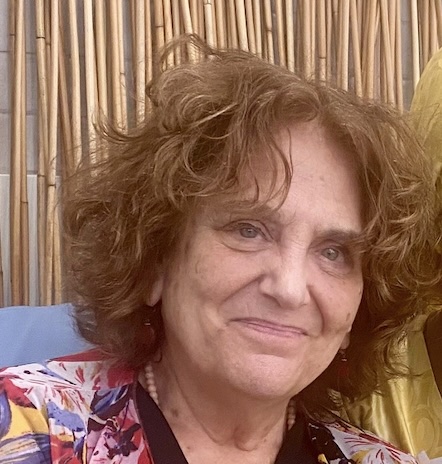
Laura Simms is a storyteller, a writer and humanitarian committed to the power of engagement to reconnect us to the heart and the earth. She has written award winning books and her most recent recording was a runner up for a Spoken Word Grammy. Laura was a longtime editorial consultant for Parabola Magazine. Her books include Our Secret Territory: the Essence of Storytelling and The Robe of Love, Secret Instructions for the Heart. She continues to work and teach worldwide. Most recently she was a literary advisor for the Fetzer Foundation’s Sacred Story Project. According to Vi Hilbert, Salish Elder, “Laura embodies the spirit of story.” She studies and teaches mindfulness awareness and dharma art.
Return to top
